

Dogs Who Eat Poo - Coprophagia
If your dog eats their own poo or even the poo of other dogs, you are likely to see it as quite a disgusting habit and wish to do something about it. You may be less eager to cuddle close to your dog and, from a health point of view, you may worry what germs and diseases your dog could be picking up. Also, their habit of eating poo may restrict their freedom as you are more likely to keep your dog on their lead during walks.
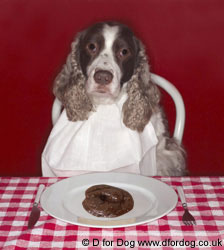
But before we tackle how to nip this behaviour in the bud, we should first consider why a dog might eat poo.
Firstly it is important to realise that coprophagia (eating poo) is actually quite common. Horse or rabbit dropping would usually be preferred but other dog poo or even the dog's own poo will suffice if no other faeces are available.
Nutritional deficiency is commonly believed to be a reason for poo eating, so it is important to rule this out first. However, a dog fed on a good quality complete dog food should already be getting all the nutrients they require. If you are feeding a low quality food then try selecting a better quality brand. If you feed a home-cooked diet, make sure that the correct proportions of food groups and that the correct nutrients are being provided.
Another possible clinical cause of coprophagia could be a digestion problem. In other words, you are feeding the correct nutrients but your dog is not able to digest what they need. Your vet may need to examine your dog to rule out this possibility.
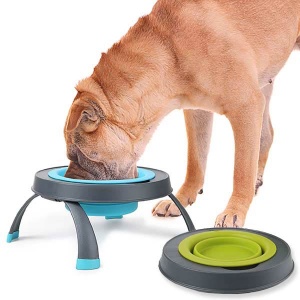
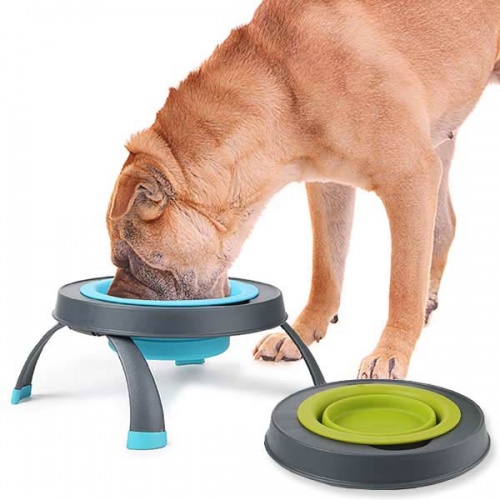
Having said that, poor digestion can be caused by something relatively simple such as eating too quickly. Fast eating can result in vomiting, gagging, gas, belching and poor nutrient absorption. Instinctively the dog may then try to reprocess it by eating up his own nutrient rich poo. If this is the case then slowing down your dog's eating could help. There are a number of 'slow down' dog bowls available that can help do just that.
One particular nutrient often thought to lead to poo eating is a lack of vitamin B. Supplementing your dog’s diet with Vitamin B could therefore help, but please note that this should not be required if your dog is already fed a good quality complete food. However, if supplementation is required, try conditioning tablets from the pet shop or brewers' yeast from the health food shop.
Other reasons for eating faeces are behavioural based. Your dog may simply eat poo because it is an instinct, because it smells nutritious or they simply find it pleasurable. In this case, your disapproval will have little effect since the pleasure gained from eating the poo probably outweighs any displeasure from an unhappy owner.
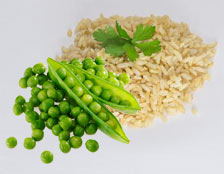
Don't discount the fact that a scavenging dog may simply be bored with their usual diet, making them more likely to seek out more novel food sources. Therefore, introducing some new food sources to your dog's diet could help. Try adding small amounts of raw meat, raw offal, fish, egg yolk, green leafy vegetables or brown rice to their meals.
Eating poo seems revolting to us but many wild animals eat faeces, especially at times when food sources are scarce. The dog’s instinct is that of a scavenger. Faecal matter can contain many nutrients and be a surprisingly good source of protein. A dog that eats faeces may therefore just be seeing poop as another food source – waste not want not. Clinical reasons aside, it is often thought that this is the most common reason why a dog eats faeces. The dog will start by recycling their own poo and generalise to eating any poo they come across or poop that smells particularly nutrient rich.
Assuming that clinical reasons for the coprophagia have been ruled out and assuming the issue is therefore a behavioural one, how can we stop our dog from eating poo?
You can try muzzling your dog during walkies. This will only work if you muzzle your dog each and every time they are likely to encounter poo, unless you are lucky and the use of the muzzle breaks the habit. However, the use of a muzzle doesn’t actually teach your dog not to eat poo, nor does it address any underlying medical problems or behavioural issues. But yes, it can be a relatively simple solution to a difficult problem, and is certainly something I have used in the past with one of my dogs. If you do decide to use a muzzle then pick a light weight basket design that allows your dog to pant and breathe normally.
If your dog gobbles up his own poo or the poo of other dogs in the household, some suggest feeding small amounts of pineapple in with their usual meal. This can apparently put them off eating the end product. Courgette is also said to make stools taste unpleasant.
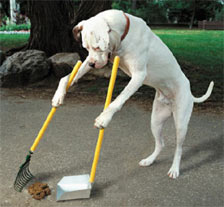
Another solution for a dog who eats their own poo is simply to clean it up as soon as they have toileted. You can hope to break the habit but it may take some time. Also, if you clean up poop quickly you risk the poop becoming an item of perceived value to your dog, which is the opposite of what you wish to achieve. Instead, call your dog in for a treat after they have toileted, close the door and with your dog inside go out afterwards to quickly and quietly pick up the poo.
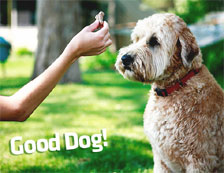
A more long term solution is to train your dog not to eat faeces. If you make a big fuss when your dog eats poop and try to stop your dog mid-scoff, your dog is likely to simply attempt to be quicker next time. They may even think you are in competition and trying to reach the poop because you desire to have it. Distraction and reward is therefore preferable. Teaching the leave command can help. It is important, in this kind of training, that any alternative you offer is very special and tasty. It must be much more inviting to your dog than the poo.
 In stubborn cases some suggest consequences to the unwanted behaviour. Use these techniques with caution, if at all, especially aversion devices such as citronella sprays which are unpleasant and can frighten your dog. The smell and taste also lasts quite some time, even though they have since backed away from the poo, so the accuracy of what you are trying to teach is compromised. If you choose to use aversion therapy then use a technique that is instant and pin points the behaviour you wish to eliminate. You only want to interrupt the behaviour, not scare your dog. However, before using any aversion techniques you must make sure that your dog is generally happy and confident. An anxious dog is not going to respond well to 'punishment'. If in doubt, it is always best to use positive training methods where you reward the good behaviour rather than punish the bad.
Owners are right to be concerned about the health issues connected with their dog eating poo, but surprisingly not as much as you would think. Probably the biggest concern is if your dog eats the faeces of other dogs and especially if they have a penchant for poo that is not fresh. In such cases, roundworm is a particular health concern. It is therefore important to worm your dog regularly. This will lessen the risk of infection with parasitic eggs.
A dog’s guts have a powerful immune response to bacteria. The modern dog’s diet can be so sterile that they may even seek out bacteria in order to address the balance and keep their immune system working effectively. So, having mentioned health concerns, it is important to point out that your dog will not suffer many ill effects as a result of eating poop, at least not in the way that humans would.
Hopefully this has given some ideas to try and some insight into the eating of poop. Good luck and remember to always be calm and kind to your dog.
By Jenny Prevel
© D for Dog www.dfordog.co.uk
This article belongs strictly to D for Dog and we do not authorise the copying of all or any part of it.
.jpg)
.jpg)
.jpg)
.jpg)
I really liked reading your article about coprophagia. I have an 8 month old lab retriever and he is always scavenging vor poo. when on lead I tell him to leave it and give him a treat. It works, but as I live right by the beach and also do dogwalking I like him to play with other dogs. He does for a short period of time and then off he goes, and has managed to find poo. I try to make his walks interesting by getting him to sit whilst I walk away and the call him when ready. He's very good. He;s not actually interested in balls or other toys and too young to go jogging with. so it is difficult to keep him entertained and engaged in me at all times. I'm now getting to the point that I don't want to let him off the lead. It has already become a habit. Do you think it's a good idea to carry on with the leave it/reward system but have a muzzle on?
He is such a good boy and I've thought him loads of tricks but the poo eating is frustrating me cause he practically has diarrhoea every day. btw, he never eats his own, only other dog's.
I have a lab/collie cross who would regularly scavenge poo when on a walk. Once I had got to the point of deciding I was getting neurotic about it and ignored her but made sure she was wormed regularly she stopped. She is now almost 5 and I can watch her sniff poo without panicking. Yes maybe she might get the odd one but I certainly am not aware of it
I have an 2-3 year old labrador bitch who has IBS syndrome and who eats other dogs poo not her own. We have tried everything to stop her of this.
Dog trainer, muzzle, which she manages to get off sometimes. When she does this it is like all her Christmases and New Year has come at once. She rushes around gathering up as much poo into her stomach that she can. I am unable to catch her a=or call her back until she fills her stomach up. Then she is ill with diarohea for sometimes 2-3 days. We give her slippery elm with her food and this saves her from omitting blood. We are desperate to try and cure her of this. Any ideas!!
We feed her on Royal Canin Anallergenic on advice of vets and this keeps her IBS under control, we supplement this with Petplus for dogs pre and probiotic powder and also multi vitamins daily. All her IBS started when we were feeding her raw food complete for puppies by Nutriment.
Interesting, thank you. I feel for all of you!!
We have 8 dogs, the youngest is a yellow lab who is 16 months. She started eating our other dogs poo (not her own) a few months ago, in fact around the time we changed them all onto a grain free, high meat, high quality dry food. I don't want to change again as it suits them well (1 is severely allergic to maize and rice, just one piece will make him vomit up everything) and I assume once they start, as it's a learned behaviour, changing the food won't help now anyway.
She's pretty obedient so I reinforced the leave command which works if I see her attempting to do it, but she does sneak it sometimes literally as one of the other dogs is doing it, it's not easy stopping her then as the dog doing it gets confused and upset so I've backed off a bit.
She has also taught 2 of our other older dogs to do it, I literally saw one of them looking at her in disgust one day, then he pounced on one himself and hasn't looked back. Incidentally they're labs and ESS's so all love their food.
I clean up the garden 3 times a day after they've been out, but it's a large garden and they're sometimes missed especially in the winter when the grass is longer.
None of them, thankfully, do it whilst out as they're far too interested in the tennis ball that they spend their walks retrieving and the river as they swim most days, they're not even interested in horse or rabbit poo! I worm them all every 3 months on the same day.
TBH although it's disgusting to watch I try not to worry about it too much, I'm hoping it'll stop as suddenly as it started, but I have to say I'm not holding my breath...except when she wants a cuddle after coming indoors from the garden!
By the way she has grated raw courgettes and other veg and a little raw meat added to her meals several times a week as she's a working lab, extremely energetic and a bit underweight if anything, but nothing makes a difference to the poo eating, or indeed her weight; it's all rather depressing when someone asks if your beautiful KC reg yellow lab is crossed with a greyhound 🙄
I will try the pineapple though, anything is worth a go!
Great article, thanks!
We did that with a flatcoat pup..double whammy , he got a ball and a game for being a good lad, and it was a diversion while I picked up. Soon stopped.
Great information, thankyou
Can dogs gain wait from eating their own or other dog poo? I have a tea pot chihuahua that is 2.5 kg and he needs to be 1.4 the vet said. I really struggle to get his weight down as he eats very little food and one treat a day and that is not everyday.
I have a 8 month rescue who does this and will scavenge all sorts of disgusting things and her recall goes out of the window. She found a full disregarded bag and all her obedience went out of the window.